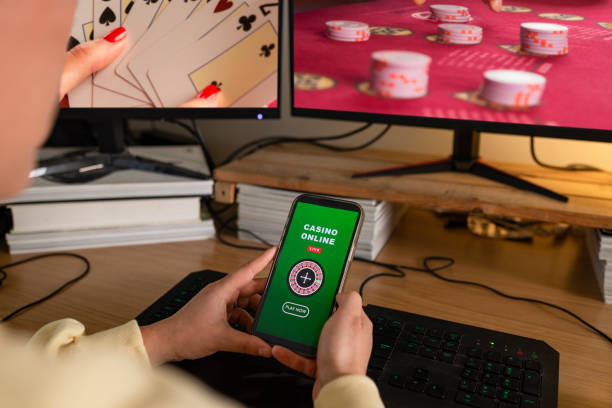
Why Most Players Lose Money on Situs Game Sites and How to Avoid ItWhy Most Players Lose Money on Situs Game Sites and How to Avoid It

WHY MOST PLAYERS LOSE MONEY ON SITUS GAME SITES AND HOW TO AVOID IT

You’re here because you’ve lost money on situs game sites. Maybe you’ve won a few times, but the losses always catch up. That’s not bad luck—it’s bad math and worse habits. The house doesn’t win by accident. It wins because most players follow the same predictable, losing patterns. Break those patterns, and you flip the script. Here’s exactly how.

KNOW THE REAL EDGE: RTP AND HOUSE ADVANTAGE

Every game on a situs site has a Return to Player (RTP) percentage. Slot RTP ranges from 88% to 98%. A 96% RTP slot means the site keeps 4% of every bet long-term. Play 10,000 spins at $1 each, and you lose $400 on average. That’s not a maybe—it’s a guarantee.

Table games are worse. Blackjack with 6 decks and standard rules has a 0.5% house edge if you play perfect basic strategy. Play 10,000 hands at $5 each, and you lose $250. Deviate from basic strategy, and the edge jumps to 2% or more. Roulette? 5.26% on American wheels. Baccarat? 1.06% on the banker bet, 14.4% on ties.

Check the RTP before you play. If the site doesn’t list it, leave. Assume the worst—most unlisted slots sit at 92% or lower. Play only games with RTP above 95%. That’s your first filter.

BANKROLL RULES: THE 1% BET SIZE LIMIT

Your bankroll dictates your bet size, not your emotions. The 1% rule is non-negotiable: never bet more than 1% of your total bankroll on a single spin, hand, or round. Have $500? Your max bet is $5. Have $2,000? $20.

Why 1%? Variance. Even a 96% RTP slot can go 500 spins without a win. At $5 per spin, 500 spins cost $2,500. If your bankroll is $500, you’re broke before the math catches up. Stick to 1%, and you survive the dry spells.

Track your sessions. Use a spreadsheet or a notes app. Record every deposit, bet, win, and loss. If you lose 20% of your bankroll in a session, stop. Walk away. No chasing. No “one more spin.” The session is over.

BONUS ABUSE: TURN FREE MONEY INTO REAL MONEY

Situs sites dangle bonuses to hook you. Most players take them, play recklessly, and lose it all. That’s by design. Bonuses come with wagering requirements—usually 30x to 50x the bonus amount. A $50 bonus with 40x wagering means you must bet $2,000 before you can withdraw.

Here’s how to clear it without losing your shirt:

1. Claim only bonuses with wagering requirements below 40x. Anything higher is a trap.

2. Play the game with the lowest house edge. For slots, pick the highest RTP available (96%+). For table games, blackjack or baccarat banker bets.

3. Bet the minimum allowed. If the bonus terms say $1 min bet, bet $1. Stretch the bonus as far as possible.

4. Stop when you hit 2x the bonus amount. If you turn $50 into $100, withdraw the $50 profit and keep the bonus. You’ve cleared the requirement without risking your own money.

Avoid “sticky” bonuses—those you can’t withdraw. Read the terms. If the bonus is non-withdrawable, treat it as a free trial, not free money.

VOLATILITY: PLAY LOW, NOT HIGH

Slot volatility measures how often and how much a slot pays. Low volatility slots pay small wins frequently. High volatility slots pay big wins rarely. Most players chase the big wins and play high volatility slots. That’s a mistake.

High volatility slots drain your bankroll fast. You might hit a 500x payout once in 10,000 spins, but you’ll lose 9,999 times before that. Low volatility slots keep you in the game longer. You won’t hit life-changing wins, but you’ll grind out small profits and survive the variance.

Stick to low or medium volatility slots. Check the paytable. If the top jackpot is 1,000x your bet or less, it’s low volatility. If it’s 10,000x or more, it’s high. Avoid the latter unless you have a bankroll to match.

TABLE GAMES: PLAY LIKE A ROBOT, NOT A GAMBLER

Table games are beatable if you follow the math. Most players don’t. They hit when they should stand, split when they shouldn’t, and chase losses. That’s how the house keeps 2% instead of 0.5%.

Blackjack basic strategy is a set of rules that reduces the house edge to 0.5%. Memorize it. Use a strategy card if you must. Never deviate. Here’s a cheat sheet:

– Always split aces and eights.

– Never split tens, fives, or fours.

– Double down on 11, and on 10 if the dealer shows 2-9.

– Hit 12-16 if the dealer shows 7-Ace.

– Stand on 17+.

Roulette? Stick to outside bets—red/black, odd/even, 1-18/19-36. They pay 1:1 and cover 47.37% of the wheel. Avoid inside bets. The payouts are higher, but the odds are worse.

Baccarat? Always bet the banker. The 1.06% house edge is the lowest on the floor. Never bet the tie. The 14.4% edge is a sucker bet.

TILT CONTROL: THE 3-LOSS RULE

Tilt is the silent killer. You lose three hands in a row, and suddenly you’re betting double, chasing losses, and making stupid decisions. The house loves tilted players. They’re predictable and reckless.

Implement the 3-loss rule: if you lose three consecutive bets, walk away. No exceptions. Close the app, log out, do something else. Tilt clouds judgment. The best decision after three losses is to stop playing.

Use a stop-loss limit. Decide before you play how much you’re willing to lose
WHY MOST PLAYERS LOSE MONEY ON SITUS GAME SITES AND HOW TO AVOID IT

You’re here because you’ve lost money on situs game sites. Maybe you’ve won a few times, but the losses always catch up. That’s not bad luck—it’s bad math and worse habits. The house doesn’t win by accident. It wins because most players follow the same predictable, losing patterns. Break those patterns, and you flip the script. Here’s exactly how.

KNOW THE REAL EDGE: RTP AND HOUSE ADVANTAGE

Every game on a situs site has a Return to Player (RTP) percentage. Slot RTP ranges from 88% to 98%. A 96% RTP slot means the site keeps 4% of every bet long-term. Play 10,000 spins at $1 each, and you lose $400 on average. That’s not a maybe—it’s a guarantee.

Table games are worse. Blackjack with 6 decks and standard rules has a 0.5% house edge if you play perfect basic strategy. Play 10,000 hands at $5 each, and you lose $250. Deviate from basic strategy, and the edge jumps to 2% or more. Roulette? 5.26% on American wheels. Baccarat? 1.06% on the banker bet, 14.4% on ties.

Check the RTP before you play. If the site doesn’t list it, leave. Assume the worst—most unlisted slots sit at 92% or lower. Play only games with RTP above 95%. That’s your first filter.

BANKROLL RULES: THE 1% BET SIZE LIMIT

Your bankroll dictates your bet size, not your emotions. The 1% rule is non-negotiable: never bet more than 1% of your total bankroll on a single spin, hand, or round. Have $500? Your max bet is $5. Have $2,000? $20.

Why 1%? Variance. Even a 96% RTP slot can go 500 spins without a win. At $5 per spin, 500 spins cost $2,500. If your bankroll is $500, you’re broke before the math catches up. Stick to 1%, and you survive the dry spells.

Track your sessions. Use a spreadsheet or a notes app. Record every deposit, bet, win, and loss. If you lose 20% of your bankroll in a session, stop. Walk away. No chasing. No “one more spin.” The session is over.

BONUS ABUSE: TURN FREE MONEY INTO REAL MONEY

Situs sites dangle bonuses to hook you. Most players take them, play recklessly, and lose it all. That’s by design. Bonuses come with wagering requirements—usually 30x to 50x the bonus amount. A $50 bonus with 40x wagering means you must bet $2,000 before you can withdraw.

Here’s how to clear it without losing your shirt:

1. Claim only bonuses with wagering requirements below 40x. Anything higher is a trap.

2. Play the game with the lowest house edge. For slots, pick the highest RTP available (96%+). For table games, blackjack or baccarat banker bets.

3. Bet the minimum allowed. If the bonus terms say $1 min bet, bet $1. Stretch the bonus as far as possible.

4. Stop when you hit 2x the bonus amount. If you turn $50 into $100, withdraw the $50 profit and keep the bonus. You’ve cleared the requirement without risking your own money.

Avoid “sticky” bonuses—those you can’t withdraw. Read the terms. If the bonus is non-withdrawable, treat it as a free trial, not free money.

VOLATILITY: PLAY LOW, NOT HIGH

Slot volatility measures how often and how much a slot pays. Low volatility slots pay small wins frequently. High volatility slots pay big wins rarely. Most players chase the big wins and play high volatility slots. That’s a mistake.

High volatility slots drain your bankroll fast. You might hit a 500x payout once in 10,000 spins, but you’ll lose 9,999 times before that. Low volatility slots keep you in the game longer. You won’t hit life-changing wins, but you’ll grind out small profits and survive the variance.

Stick to low or medium volatility slots. Check the paytable. If the top jackpot is 1,000x your bet or less, it’s low volatility. If it’s 10,000x or more, it’s high. Avoid the latter unless you have a bankroll to match.

TABLE GAMES: PLAY LIKE A ROBOT, NOT A GAMBLER

Table games are beatable if you follow the math. Most players don’t. They hit when they should stand, split when they shouldn’t, and chase losses. That’s how the house keeps 2% instead of 0.5%.

Blackjack basic strategy is a set of rules that reduces the house edge to 0.5%. Memorize it. Use a strategy card if you must. Never deviate. Here’s a cheat sheet:

– Always split aces and eights.

– Never split tens, fives, or fours.

– Double down on 11, and on 10 if the dealer shows 2-9.

– Hit 12-16 if the dealer shows 7-Ace.

– Stand on 17+.

Roulette? Stick to outside bets—red/black, odd/even, 1-18/19-36. They pay 1:1 and cover 47.37% of the wheel. Avoid inside bets. The payouts are higher, but the odds are worse.

Baccarat? Always bet the banker. The 1.06% house edge is the lowest on the floor. Never bet the tie. The 14.4% edge is a sucker bet.

TILT CONTROL: THE 3-LOSS RULE

Tilt is the silent killer. You lose three hands in a row, and suddenly you’re betting double, chasing losses, and making stupid decisions. The house loves tilted players. They’re predictable and reckless.

Implement the 3-loss rule: if you lose three consecutive bets, walk away. No exceptions. Close the app, log out, do something else. Tilt clouds judgment. The best decision after three losses is to stop playing.

Use a stop-loss limit. Decide before you play how much you’re willing to lose login wopslot.

Category: Business

Tags:

How to Use Atomic Wallet’s Price Alerts to Never Miss a Market MoveHow to Use Atomic Wallet’s Price Alerts to Never Miss a Market Move

HOW TO USE ATOMIC WALLET’S PRICE ALERTS TO NEVER MISS A MARKET MOVE

You bought crypto. You checked the price every five minutes. You lost sleep. You swore you’d never do it again. Then the market moved without you. Atomic Wallet’s price alerts fix this. Here’s exactly how to set them up, tweak them, and use them to trade smarter—not harder.

WHY PRICE ALERTS BEAT MANUAL CHECKS

Manual checks waste time. You refresh charts, scroll Twitter, and still miss the pump or dump. Price alerts hit your phone the second your target price is hit. No refresh. No FOMO. Just action. Atomic’s alerts run 24/7, even when your laptop is closed. That’s the edge.

HOW TO ENABLE PRICE ALERTS IN ATOMIC WALLET

Open Atomic Wallet. Tap the bell icon in the top-right corner. If you don’t see it, update the app—older versions hide it under settings. Once inside, tap “Add Alert.” Pick your coin from the dropdown. Bitcoin, Ethereum, or any of the 1000+ supported assets. Enter your target price. Choose “Above” or “Below” to set the direction. Hit save. Done. The alert is live.

SETTING SMART PRICE TARGETS

Don’t set alerts at random numbers. Use support and resistance levels. If Bitcoin bounces between $60k and $70k, set alerts at $61k (breakout) and $59k (breakdown). For altcoins, use 5% moves. A 5% drop in Solana? Alert. A 5% pump in Chainlink? Alert. Small moves add up. Big moves trigger trades.

CUSTOMIZING NOTIFICATIONS FOR MAXIMUM IMPACT

Atomic lets you tweak how alerts reach you. Go to settings > notifications. Toggle “Push Notifications” on. Enable “Sound” if you want a jingle when the alert fires. Set “Vibration” for silent mode. If you trade multiple coins, label each alert. “BTC Breakout” or “ETH Dump” keeps you organized. No more guessing which alert is which.

ADVANCED: USING PRICE ALERTS WITH TRADING STRATEGIES

Price alerts aren’t just for watching. Use them to execute trades. Set a buy alert 2% below support. When it fires, buy the dip. Set a sell alert 3% above resistance. When it fires, take profits. Combine alerts with stop-loss orders. If Bitcoin drops 5%, your alert triggers, and you sell before the crash. No emotions. Just strategy.

HOW TO AVOID ALERT FATIGUE

Too many alerts = ignored alerts. Limit yourself to 3-5 active alerts at a time. Delete old ones. If Bitcoin hits $65k, delete the $65k alert. Replace it with a new target. Use Atomic’s “Alert History” to track past triggers. If an alert fires but the market reverses, adjust your strategy. Not every alert leads to a trade.

TROUBLESHOOTING: WHEN ALERTS DON’T FIRE

If an alert doesn’t trigger, check three things. First, ensure your app is updated. Old versions have bugs. Second, verify your internet connection. No Wi-Fi? No alerts. Third, confirm the price source. Atomic pulls data from multiple exchanges. If CoinGecko and CoinMarketCap disagree, your alert might not fire. Refresh the app to sync prices.

BACKUP: HOW TO EXPORT ALERTS FOR SAFETY

Atomic doesn’t sync alerts across devices. If you switch phones, you lose them. Export your alerts as a backup. Go to settings > export data. Save the file to Google Drive or iCloud. Import it on your new device. No re-entering targets. No missed moves.

ATOMIC VS. EXCHANGE ALERTS: WHY WALLET ALERTS WIN

Exchanges like Binance and Coinbase offer price alerts. But they only track coins you hold on their platform. Atomic tracks any coin, even if you store it in your wallet. No need to transfer funds to an exchange just to watch prices. Atomic’s alerts are private. Exchanges log your alert history. Atomic doesn’t. Your strategy stays yours.

HOW TO USE ALERTS FOR LONG-TERM HOLDING

Not a trader? Alerts still help. Set a “Moon Shot” alert for 50% gains. When it fires, decide: sell, hold, or buy more. Set a “Panic Sell” alert for 30% drops. If it fires, reassess. Maybe the project is dead. Maybe it’s a buying opportunity. Alerts turn long-term holding into active management.

REAL-WORLD EXAMPLE: CATCHING A 20% PUMP

Let’s say you hold Cardano (ADA). You set an alert for 20% above the current price. Two weeks later, ADA pumps 25%. Your alert fires. You open Atomic, check the chart, and see the breakout. You sell 50% to lock in profits. The rest you hold for higher targets. Without the alert, you’d have missed the peak.

REAL-WORLD EXAMPLE: AVOIDING A 30% DUMP

You hold Solana (SOL). You set an alert for 10% below support. SOL drops 12%. Your alert fires. You check the news—no major hacks or bad updates. You buy more at the dip. The next day, SOL rebounds 15%. Your alert saved you from panic selling. It also gave you a chance to average down.

HOW TO COMBINE ALERTS WITH OTHER TOOLS

Atomic’s alerts work best with other tools. Use TradingView for chart analysis. Set alerts in Atomic based on TradingView’s indicators. Use CoinGecko for market cap data. If a coin’s market cap drops below $1B, set an alert. Use Twitter for news. If a project announces a partnership, set an alert for a 10% pump. Alerts + tools = smarter trades.

WHAT TO DO WHEN AN ALERT FIRES

Don’t act immediately. Check the chart. Is the move confirmed? Look at volume. Low volume? Fakeout. High volume? Real move. Check the news. Is there a catalyst? If yes, act. If no, wait. Set a new alert for the next level. Rinse and repeat.

HOW TO SET ALERTS FOR NFT FLOOR PRICES

Atomic supports NFTs. Set alerts for floor price drops. If Bored Ape Yacht Club’s floor drops 10%, your alert fires. You buy the dip. If the floor pumps 20%, your alert fires. You sell for profit. NFT alerts turn flipping into a science.

HOW TO USE ALERTS FOR STAKING REWARDS

Staking rewards fluctuate with price. Set an alert for when your staked coin drops 5%. When it fires
HOW TO USE ATOMIC WALLET’S PRICE ALERTS TO NEVER MISS A MARKET MOVE

You bought crypto. You checked the price every five minutes. You lost sleep. You swore you’d never do it again. Then the market moved without you. Atomic wallet Wallet’s price alerts fix this. Here’s exactly how to set them up, tweak them, and use them to trade smarter—not harder.

WHY PRICE ALERTS BEAT MANUAL CHECKS

Manual checks waste time. You refresh charts, scroll Twitter, and still miss the pump or dump. Price alerts hit your phone the second your target price is hit. No refresh. No FOMO. Just action. Atomic’s alerts run 24/7, even when your laptop is closed. That’s the edge.

HOW TO ENABLE PRICE ALERTS IN ATOMIC WALLET

Open Atomic Wallet. Tap the bell icon in the top-right corner. If you don’t see it, update the app—older versions hide it under settings. Once inside, tap “Add Alert.” Pick your coin from the dropdown. Bitcoin, Ethereum, or any of the 1000+ supported assets. Enter your target price. Choose “Above” or “Below” to set the direction. Hit save. Done. The alert is live.

SETTING SMART PRICE TARGETS

Don’t set alerts at random numbers. Use support and resistance levels. If Bitcoin bounces between $60k and $70k, set alerts at $61k (breakout) and $59k (breakdown). For altcoins, use 5% moves. A 5% drop in Solana? Alert. A 5% pump in Chainlink? Alert. Small moves add up. Big moves trigger trades.

CUSTOMIZING NOTIFICATIONS FOR MAXIMUM IMPACT

Atomic lets you tweak how alerts reach you. Go to settings > notifications. Toggle “Push Notifications” on. Enable “Sound” if you want a jingle when the alert fires. Set “Vibration” for silent mode. If you trade multiple coins, label each alert. “BTC Breakout” or “ETH Dump” keeps you organized. No more guessing which alert is which.

ADVANCED: USING PRICE ALERTS WITH TRADING STRATEGIES

Price alerts aren’t just for watching. Use them to execute trades. Set a buy alert 2% below support. When it fires, buy the dip. Set a sell alert 3% above resistance. When it fires, take profits. Combine alerts with stop-loss orders. If Bitcoin drops 5%, your alert triggers, and you sell before the crash. No emotions. Just strategy.

HOW TO AVOID ALERT FATIGUE

Too many alerts = ignored alerts. Limit yourself to 3-5 active alerts at a time. Delete old ones. If Bitcoin hits $65k, delete the $65k alert. Replace it with a new target. Use Atomic’s “Alert History” to track past triggers. If an alert fires but the market reverses, adjust your strategy. Not every alert leads to a trade.

TROUBLESHOOTING: WHEN ALERTS DON’T FIRE

If an alert doesn’t trigger, check three things. First, ensure your app is updated. Old versions have bugs. Second, verify your internet connection. No Wi-Fi? No alerts. Third, confirm the price source. Atomic pulls data from multiple exchanges. If CoinGecko and CoinMarketCap disagree, your alert might not fire. Refresh the app to sync prices.

BACKUP: HOW TO EXPORT ALERTS FOR SAFETY

Atomic doesn’t sync alerts across devices. If you switch phones, you lose them. Export your alerts as a backup. Go to settings > export data. Save the file to Google Drive or iCloud. Import it on your new device. No re-entering targets. No missed moves.

ATOMIC VS. EXCHANGE ALERTS: WHY WALLET ALERTS WIN

Exchanges like Binance and Coinbase offer price alerts. But they only track coins you hold on their platform. Atomic tracks any coin, even if you store it in your wallet. No need to transfer funds to an exchange just to watch prices. Atomic’s alerts are private. Exchanges log your alert history. Atomic doesn’t. Your strategy stays yours.

HOW TO USE ALERTS FOR LONG-TERM HOLDING

Not a trader? Alerts still help. Set a “Moon Shot” alert for 50% gains. When it fires, decide: sell, hold, or buy more. Set a “Panic Sell” alert for 30% drops. If it fires, reassess. Maybe the project is dead. Maybe it’s a buying opportunity. Alerts turn long-term holding into active management.

REAL-WORLD EXAMPLE: CATCHING A 20% PUMP

Let’s say you hold Cardano (ADA). You set an alert for 20% above the current price. Two weeks later, ADA pumps 25%. Your alert fires. You open Atomic, check the chart, and see the breakout. You sell 50% to lock in profits. The rest you hold for higher targets. Without the alert, you’d have missed the peak.

REAL-WORLD EXAMPLE: AVOIDING A 30% DUMP

You hold Solana (SOL). You set an alert for 10% below support. SOL drops 12%. Your alert fires. You check the news—no major hacks or bad updates. You buy more at the dip. The next day, SOL rebounds 15%. Your alert saved you from panic selling. It also gave you a chance to average down.

HOW TO COMBINE ALERTS WITH OTHER TOOLS

Atomic’s alerts work best with other tools. Use TradingView for chart analysis. Set alerts in Atomic based on TradingView’s indicators. Use CoinGecko for market cap data. If a coin’s market cap drops below $1B, set an alert. Use Twitter for news. If a project announces a partnership, set an alert for a 10% pump. Alerts + tools = smarter trades.

WHAT TO DO WHEN AN ALERT FIRES

Don’t act immediately. Check the chart. Is the move confirmed? Look at volume. Low volume? Fakeout. High volume? Real move. Check the news. Is there a catalyst? If yes, act. If no, wait. Set a new alert for the next level. Rinse and repeat.

HOW TO SET ALERTS FOR NFT FLOOR PRICES

Atomic supports NFTs. Set alerts for floor price drops. If Bored Ape Yacht Club’s floor drops 10%, your alert fires. You buy the dip. If the floor pumps 20%, your alert fires. You sell for profit. NFT alerts turn flipping into a science.

HOW TO USE ALERTS FOR STAKING REWARDS

Staking rewards fluctuate with price. Set an alert for when your staked coin drops 5%. When it fires

Category: Business

Tags:

Kreatin Monohydrat Gummis Die süße Geheimwaffe für FitnessenthusiastenKreatin Monohydrat Gummis Die süße Geheimwaffe für Fitnessenthusiasten

Was sind Kreatin Monohydrat Gummis?

Kreatin Monohydrat Gummis erfreuen sich in der Welt des Fitness und Bodybuilding wachsender Beliebtheit. Diese innovativen Gummis bieten eine schmackhafte Alternative zu herkömmlichen Kreatin-Pulvern und -Tabletten, die oft schwer zu dosieren und unpraktisch sind. Durch die Kombination aus süßem Geschmack und effektiver Wirkstoffformel sind sie ideal für Sportler, die ihre Leistung steigern möchten.

Vorteile von Kreatin Monohydrat

Kreatin ist bekannt für seine positiven Effekte auf die Muskelkraft und die Leistungsfähigkeit während intensiver Trainingseinheiten. Die Einnahme von Kreatin kann helfen, die Muskelmasse zu erhöhen und die Regeneration nach dem Training zu verbessern. Die Gummis bieten eine einfache Möglichkeit, die tägliche Dosis Kreatin zu sich zu nehmen, ohne auf Wasser oder Shaker angewiesen zu sein.

Warum Gummis wählen?

Die Entscheidung für Kreatin Gummis bringt zahlreiche Vorteile mit sich. Sie sind leicht zu transportieren, geschmacklich ansprechend und fördern die regelmäßige Einnahme des Supplements. Außerdem sind sie perfekt für unterwegs – sei es im Fitnessstudio, im Büro oder auf Reisen. Viele Sportler berichten von einem angenehmen Geschmackserlebnis, das die Einnahme von Nahrungsergänzungsmitteln erheblich erleichtert.

Wo findest du die besten Kreatin Gummis?

Wenn du auf der Suche nach hochwertigen Kreatin Monohydrat Gummis bist, dann schaue dir die Auswahl auf m17balance.de/collections/kreatin-monohydrat-gummis an. Dort findest du verschiedene Geschmacksrichtungen und Produkte, die speziell für Fitnessbegeisterte entwickelt wurden.

Fazit

Kreatin Monohydrat Gummis sind eine hervorragende Wahl für alle, die ihre Fitnessziele erreichen möchten. Mit ihrem köst

Category: Health & Fitness

Tags:

Slot Game Online Step By Step GuideSlot Game Online Step By Step Guide

If you’re looking to dive into the earthly concern of online slot games, you’ve come to the right point. You ll want to start by pick a good gambling casino and setting up your describe. From there, it s all about finding a game that suits your style. But before you hit that spin button, there are some key details you should know. Let s explore what you need to consider to maximize your gaming undergo.

Understanding the Basics of Slot Games

When you dive into the worldly concern of slot games, you’ll chop-chop reveal they’re not just about spinning reels; they also come with their own set of rules and features. Each game has its unique topic, symbols, and paylines that successful combinations.

You’ll run into classic three-reel slots, which offer a unhappy feel, and more video slots jam-packed with moral force nontextual matter and bonus rounds. Understanding the bring back to player(RTP) share is crucial, as it indicates how much you can expect to win back over time.

Additionally, familiarize yourself with the different types of symbols, such as wilds and scatters, as they can unlock exciting features and step-up your chances of victorious. Embrace these basics to raise your play experience.

Choosing the Right Online Slot Game

Choosing the right online slot game can importantly raise your gaming undergo, especially since there are uncounted options available.

Start by considering your subjective preferences. Do you yield machines, or are you closed to Bodoni font video recording slots with engaging themes? Look for games that boast visuals and sounds you find likable.

Next, check the game’s unpredictability; low unpredictability slots offer sponsor wins but small payouts, while high unpredictability games can lead to bigger wins but less often.

Finally, consider the bring back to participant(RTP) portion, as higher RTPs in general mean better chances of victorious over time.

Learning About Paylines and Betting Options

Understanding paylines and sporting options is material for increasing your succeeder in online slot games. Paylines how many ways you can win on each spin. You ll find games with traditional vertical and flat paylines, as well as more patterns.

Familiarize yourself with the specific paylines for the game you select, as they can vary importantly.

Next, consider your sporting options. Most games let you correct your bet size, which influences your potential winnings. Higher bets can lead to larger payouts, but they also come with greater risk.

Always pick out a bet that fits your budget and acting title. By understanding these , you ll make more conversant decisions and raise your overall gaming see.

Exploring Bonuses and Promotions in Slot Games

After prehension paylines and dissipated options, it’s time to research the exciting earth of bonuses and promotions in slot games. These incentives can importantly advance your gameplay undergo. wow77 link alternatif.

Start by checking welcome bonuses, which often cater spear carrier spins or bonus cash when you sign up. Look for free spins promotions, allowing you to try particular games without risking your monetary resource.

Loyalty programs pay back you for consistent play, offer points that can be exchanged for cash or bonuses. Don t leave about seasonal worker promotions and tournaments, where you can win hefty prizes.

Always read the price and conditions to understand wagering requirements. By pickings advantage of these offers, you ll enhance your chances of winning while enjoying the tickle of online slots

Conclusion

Now that you ve got a solid state understanding of online slot games, you re fix to dive in Remember to pick a esteemed gambling casino, explore different games, and acquaint yourself with their features. Don t leave to correct your betting options to fit your budget and take advantage of any bonuses or promotions available. Enjoy the tickle of spinning those reels, and always play responsibly. Have fun and good luck on your gambling travel

Category: Gaming

Tags:

The Coltish Office Renting Gyration In Municipality CentersThe Coltish Office Renting Gyration In Municipality Centers


The Unseen Shift: How Playful Design is Redefining Workplace Culture

The modern font office rental commercialize is undergoing a unstable transmutation, driven not by square up footage or location, but by an unplanned squeeze: gaiety. While orthodox corporate environments prioritized sterility and pecking order, today s leadership enterprises recognise that creativeness thrives in spaces that encourage experimentation and joy. According to a 2024 describe by the Global Workplace Initiative, 68 of Fortune 500 companies have integrated wicked plan into their leased office spaces a 42 increase from 2021. This transfer reflects a deeper discernment evolution: workers increasingly seek environments that mirror the dynamism of their personal lives, rejecting the monolithic cubicles of the past. The data is clear spaces that immingle work with whimsey describe 34 high employee satisfaction dozens, underscoring the worldly viability of this slew. Yet, at a lower place the come up, this movement is not merely aesthetic; it is a strategic reimagining of how space, culture, and productivity cross in the renting market.

The Psychological Underpinnings of Play in Professional Settings

Neuroscience reveals that play triggers the unblock of dopamine, a neurotransmitter connected to need and psychological feature tractability. When applied to power design, this translates into measurable gains in trouble-solving and quislingism. A 2024 contemplate by the University of Michigan base that employees in teasing power environments demonstrated a 22 melioration in productive task performance compared to those in traditional settings. This scientific discipline vantage is not lost on landlords and developers, who are now retrofitting older buildings with standard play zones, slide-adjacent staircases, and synergistic whiteboards disguised as wall art. The irony is perceptible: the same spaces once designed for rigidness are now being repurposed to nurture the very traits innovation, adaptability, and joy that modern businesses demand. Yet, critics argue that such designs risk trivializing work, turn offices into subject Parks rather than hubs of productivity. The counterargument is equally compelling: when play is wilful and purposeful, it becomes a tool for deep sharpen, not misdirection.

The Economic Mechanics: Why Landlords Are Betting on Playful Spaces

The commercial real sphere is notoriously risk-averse, yet the sportive office rental sheer is defying . Data from C
E s 2024 Global Occupier Survey reveals that buildings with elvish conveniences compel a 15 premium in rental rates compared to traditional offices. This is not mere speculation; it is a response to tenant demand. Companies like Google and Spotify have pioneered this model, but even mid-sized firms are now prioritizing leases with whippy, game-like layouts. The economic science are unequivocal: frisky spaces reduce turnover by 28, translating to turn down tenant improvement costs for landlords. Furthermore, these designs draw a younger me, with 72 of Gen Z professionals citing”creative workspace” as a top precedency when evaluating job offers. Landlords are not merely chasing trends they are recalibrating their plus strategies to ordinate with the new perceptiveness zeitgeist, where office rental decisions are increasingly tied to employee well-being and mar identity.

The Hidden Costs of Over-Playfulness: When Design Goes Too Far

Not all wicked designs succumb prescribed returns. A 2024 psychoanalysis by JLL establish that 18 of companies that implemented unreasonable play elements such as full-sized ball pits or practical world arcades saw a 12 drop in productiveness due to misdirection. The line between stirring and self-indulgence is thin, and the consequences can be costly. For exemplify, a tech inauguration in Berlin expended 500,000 on a”playful” office only to turn back to a minimalist layout after employees rumored trouble concentrating. The lesson is : playfulness must be meaningful, not performative. Successful designs balance notion with functionality, incorporating quiet zones alongside cooperative hubs. The key is intentionality every pixilated element should suffice a specific, mensurable resolve, whether it s reducing try, fostering collaboration, or plainly qualification the power a aim employees want to be.

Case Study 1: The Corporate Reinvention of a 19th-Century Warehouse

A 120-year-old brick warehouse in Amsterdam s Jordaan district stood empty for five geezerhood before being changed into a mocking office hub for a multinational consultancy. The first challenge was twofold: the edifice s existent restrictions prevented morphologic modifications, and the guest s manpower of 200 consultants requisite both private sharpen rooms and collaborative spaces. The solution was a standard plan that well-kept the warehouse s raw esthetic while introducing personal chattel”play pods” equipped with whiteboards, bean bags, and writable surfaces. The pods, which could be reconfigured daily, allowed teams to tailor their environments to the task at hand. Methodology enclosed a six-month pilot phase where employee feedback was collected via an in-house app, with adjustments made in real time. The resultant was striking: productivity prosody improved by 31, and the edifice s occupancy rate jumped from 40 to 95 within 12 months. The case demonstrates how teasing plan can coexist with existent constraints, provided the approach is reconciling and data-driven.

Case Study 2: The Gaming Company That Turned Its Office Into a Live-Action RPG

A mid-sized gambling studio apartment in Montreal long-faced a unusual take exception: its hands of 150 developers and designers were progressively disengaged, despite workings in a modern, agreeableness-rich office. The interference was radical a nail gamification of the work. The studio apartment introduced a role-playing game(RPG) framework where employees earned points for additive tasks, collaborating with colleagues, and attention wellness workshops. Points could be redeemed for perks like sprawly dejeuner breaks or premium parking spots. The methodological analysis encumbered usance software package that tracked get along and a each week”boss combat” where teams competed in problem-solving challenges. Within six months, employee involution lashing rose by 42, and the studio apartment rumored a 25 increase in picture deliverance speed. The case highlights how puckish plan can be operationalized to measurable byplay outcomes, provided the mechanism are obvious and comprehensive.

Case Study 3: The Co-Working Space That Became a Playground for Freelancers

A co-working operator in Lisbon identified a gap in the commercialise: freelancers and solopreneurs were underserved by orthodox co-working spaces, which often prioritized organized clients. The root was”Playground Cowork,” a 5,000-square-foot readiness designed as a typo resort area. Features enclosed a rooftop mini-golf course, a subroutine library of board games, and a”quiet nook” with hammocks and impervious pods. The methodological analysis encumbered hebdomadally community events, such as”Lunch & Learn” Roger Huntington Sessions with client speakers, and a points system where members attained badges for participation. Within a year, Playground Cowork s rank grew by 200, and the average out renter stay increased from 6 to 18 months. The case underscores how frolicsome plan can nurture community and trueness in a segment often unmarked by traditional office renting models.

The Future: Playful Design as the New Corporate Standard

The prankish power renting swerve is not a passage fad it is the van of a broader redefinition of workspaces. By 2025, Gartner predicts that 70 of enterprises will integrate rascally elements into their office designs, up from just 20 in 2022. This transfer is being expedited by the rise of loanblend work, which has unscheduled companies to reconsideration their physical spaces as destinations rather than obligations. The most send on-thinking landlords are now offer”play packages” as part of their leasing agreements, including everything from ping-pong tables to speculation pods. Yet, the true innovators are those who regale playfulness as a plan of action asset, not a doohickey. The time to come of office renting lies in spaces that are both usefulness and fun a poise that will define the next multiplication of workplaces.

The Unseen Shift: How Playful Design is Redefining Workplace Culture

The modern font office rental commercialize is undergoing a unstable transmutation, driven not by square up footage or location, but by an unplanned squeeze: gaiety. While orthodox corporate environments prioritized sterility and pecking order, today s leadership enterprises recognise that creativeness thrives in spaces that encourage experimentation and joy. According to a 2024 describe by the Global Workplace Initiative, 68 of Fortune 500 companies have integrated wicked plan into their leased office spaces a 42 increase from 2021. This transfer reflects a deeper discernment evolution: workers increasingly seek environments that mirror the dynamism of their personal lives, rejecting the monolithic cubicles of the past. The data is clear spaces that immingle work with whimsey describe 34 high employee satisfaction dozens, underscoring the worldly viability of this slew. Yet, at a lower place the come up, this movement is not merely aesthetic; it is a strategic reimagining of how space, culture, and productivity cross in the renting market.

The Psychological Underpinnings of Play in Professional Settings

Neuroscience reveals that play triggers the unblock of dopamine, a neurotransmitter connected to need and psychological feature tractability. When applied to power design, this translates into measurable gains in trouble-solving and quislingism. A 2024 contemplate by the University of Michigan base that employees in teasing power environments demonstrated a 22 melioration in productive task performance compared to those in traditional settings. This scientific discipline vantage is not lost on landlords and developers, who are now retrofitting older buildings with standard play zones, slide-adjacent staircases, and synergistic whiteboards disguised as wall art. The irony is perceptible: the same spaces once designed for rigidness are now being repurposed to nurture the very traits innovation, adaptability, and joy that modern businesses demand. Yet, critics argue that such designs risk trivializing work, turn offices into subject Parks rather than hubs of productivity. The counterargument is equally compelling: when play is wilful and purposeful, it becomes a tool for deep sharpen, not misdirection.

The Economic Mechanics: Why Landlords Are Betting on Playful Spaces

The commercial real sphere is notoriously risk-averse, yet the sportive office rental sheer is defying . Data from C
E s 2024 Global Occupier Survey reveals that buildings with elvish conveniences compel a 15 premium in rental rates compared to traditional offices. This is not mere speculation; it is a response to tenant demand. Companies like Google and Spotify have pioneered this model, but even mid-sized firms are now prioritizing leases with whippy, game-like layouts. The economic science are unequivocal: frisky spaces reduce turnover by 28, translating to turn down tenant improvement costs for landlords. Furthermore, these designs draw a younger me, with 72 of Gen Z professionals citing”creative workspace” as a top precedency when evaluating job offers. Landlords are not merely chasing trends they are recalibrating their plus strategies to ordinate with the new perceptiveness zeitgeist, where office rental decisions are increasingly tied to employee well-being and mar identity.

The Hidden Costs of Over-Playfulness: When Design Goes Too Far

Not all wicked designs succumb prescribed returns. A 2024 psychoanalysis by JLL establish that 18 of companies that implemented unreasonable play elements such as full-sized ball pits or practical world arcades saw a 12 drop in productiveness due to misdirection. The line between stirring and self-indulgence is thin, and the consequences can be costly. For exemplify, a tech inauguration in Berlin expended 500,000 on a”playful” office only to turn back to a minimalist layout after employees rumored trouble concentrating. The lesson is : playfulness must be meaningful, not performative. Successful designs balance notion with functionality, incorporating quiet zones alongside cooperative hubs. The key is intentionality every pixilated element should suffice a specific, mensurable resolve, whether it s reducing try, fostering collaboration, or plainly qualification the power a aim employees want to be.

Case Study 1: The Corporate Reinvention of a 19th-Century Warehouse

A 120-year-old brick warehouse in Amsterdam s Jordaan district stood empty for five geezerhood before being changed into a mocking workshop venue hub for a multinational consultancy. The first challenge was twofold: the edifice s existent restrictions prevented morphologic modifications, and the guest s manpower of 200 consultants requisite both private sharpen rooms and collaborative spaces. The solution was a standard plan that well-kept the warehouse s raw esthetic while introducing personal chattel”play pods” equipped with whiteboards, bean bags, and writable surfaces. The pods, which could be reconfigured daily, allowed teams to tailor their environments to the task at hand. Methodology enclosed a six-month pilot phase where employee feedback was collected via an in-house app, with adjustments made in real time. The resultant was striking: productivity prosody improved by 31, and the edifice s occupancy rate jumped from 40 to 95 within 12 months. The case demonstrates how teasing plan can coexist with existent constraints, provided the approach is reconciling and data-driven.

Case Study 2: The Gaming Company That Turned Its Office Into a Live-Action RPG

A mid-sized gambling studio apartment in Montreal long-faced a unusual take exception: its hands of 150 developers and designers were progressively disengaged, despite workings in a modern, agreeableness-rich office. The interference was radical a nail gamification of the work. The studio apartment introduced a role-playing game(RPG) framework where employees earned points for additive tasks, collaborating with colleagues, and attention wellness workshops. Points could be redeemed for perks like sprawly dejeuner breaks or premium parking spots. The methodological analysis encumbered usance software package that tracked get along and a each week”boss combat” where teams competed in problem-solving challenges. Within six months, employee involution lashing rose by 42, and the studio apartment rumored a 25 increase in picture deliverance speed. The case highlights how puckish plan can be operationalized to measurable byplay outcomes, provided the mechanism are obvious and comprehensive.

Case Study 3: The Co-Working Space That Became a Playground for Freelancers

A co-working operator in Lisbon identified a gap in the commercialise: freelancers and solopreneurs were underserved by orthodox co-working spaces, which often prioritized organized clients. The root was”Playground Cowork,” a 5,000-square-foot readiness designed as a typo resort area. Features enclosed a rooftop mini-golf course, a subroutine library of board games, and a”quiet nook” with hammocks and impervious pods. The methodological analysis encumbered hebdomadally community events, such as”Lunch & Learn” Roger Huntington Sessions with client speakers, and a points system where members attained badges for participation. Within a year, Playground Cowork s rank grew by 200, and the average out renter stay increased from 6 to 18 months. The case underscores how frolicsome plan can nurture community and trueness in a segment often unmarked by traditional office renting models.

The Future: Playful Design as the New Corporate Standard

The prankish power renting swerve is not a passage fad it is the van of a broader redefinition of workspaces. By 2025, Gartner predicts that 70 of enterprises will integrate rascally elements into their office designs, up from just 20 in 2022. This transfer is being expedited by the rise of loanblend work, which has unscheduled companies to reconsideration their physical spaces as destinations rather than obligations. The most send on-thinking landlords are now offer”play packages” as part of their leasing agreements, including everything from ping-pong tables to speculation pods. Yet, the true innovators are those who regale playfulness as a plan of action asset, not a doohickey. The time to come of office renting lies in spaces that are both usefulness and fun a poise that will define the next multiplication of workplaces.

Category: Other

Tags: